HADRIANVS The CrownThe WallThe Greeks MourningThe DarkThe Evidence

Publius Aelius Hadrianus · AD 76–138

Hadrian

From the Tyne to the Nile — the restless emperor who chose Rome's limits, and built them.

The reading desk

You are not reading a biography. You are opening an imperial inspection desk under lamplight — maps of Britannia, Athens, Egypt, Judaea and Numidia, a wax tablet, survey rods, a quarry sample, a chiselled inscription, a coil of red wool, a bronze lamp. The Wall, Lambaesis, Athens, the villa at Tivoli, Antinoopolis, even Aelia Capitolina are not separate subjects. They are different languages of one mind: see, measure, classify, name, honour, discipline, memorialise.

What we refuse to do
  • We do not solve the death of Antinous.
  • We do not stamp a modern sexuality label on him as fact.
  • We do not say he designed the Wall, or name its designer.
  • We do not call him “simply Spanish.”
  • We do not treat the gossip of the Historia Augusta as testimony.
  • We do not net the moral ledger out to a single verdict.

The evidence key — two registers on every claim

Evidence INSCRIPTIONARCHAEOLOGYOBJECT ANCIENT SOURCEANCIENT ANECDOTESCHOLARLY SYNTHESIS INTERPRETATIONRECONSTRUCTIONLIVE LEADUNKNOWN
Certainty knownlikely debatedunknownreconstruction

The claim is stated plainly; the tab does the hedging. An inscription cut in stone is not a story a biographer told three centuries later — and we never let the two wear the same weight.

I
The made man

Restless Crown

The empire is a thing to be managed — and a summit reached without a clean claim to it.

The road begins where the man was made, not where he was born — because where he was born is contested, and this page says so. The Historia Augusta puts his birth in Rome on 24 January AD 76 ANCIENT SOURCE debated. His family's roots were at Italica in Baetica, his mother's at Gades ARCHAEOLOGY known. English Heritage follows the Historia Augusta on the birthplace while noting the family; a minority line leans toward Italica. The honest position is disputed — never “simply Spanish,” never “Spanish-born” as fact. He was a provincial-elite child of a Hispano-Roman network — Italica and Rome, Latin and Greek, old aristocracy and new provincial money — and he seems to have decided early that the gap between worlds was where he would live.

His father died when he was about ten, and he became the ward of Trajan and of Attianus. In his mid-teens he was sent back to Italica for military service, where he hunted so hard that Trajan recalled him ANCIENT ANECDOTE debated — the first appearance of a passion that never left him, and the first appearance of Trajan as the man who corrected him. Trajan then advanced his whole career: military tribuneships, the offices recorded on his Athens career base — IG II² 3286, naming the archonship of 112/113 INSCRIPTION known — a staff role in the Dacian Wars. No personal combat is attested in the reign; none is claimed. In his youth they called him “Graeculus,” little Greekling, for his Greek studies; the tradition says his provincial accent was mocked when he read a speech as quaestor, after which he drilled it out of himself ANCIENT ANECDOTE debated. The man who would later build his own ambiguity into Athenian marble first learned to manage how he was heard.

Then the dark opening, stated plain.

He came to power in AD 117 as legate of Syria, through a deathbed adoption announced by interested parties — Plotina and Attianus — under a suspicion alive in antiquity that the adoption was arranged after Trajan was already dead. The reign opened over four fresh consular graves: Palma, Celsus, Nigrinus and Lusius Quietus ANCIENT SOURCE debated. The page does two things at once: it does not bury the four deaths, and it does not state as fact a personal order the ancient record itself contests — the deaths are not in dispute; whether Hadrian ordered them is. The hostility of the surviving senatorial sources is named right here, so the dark opening is honest about its own sourcing, not merely dark.
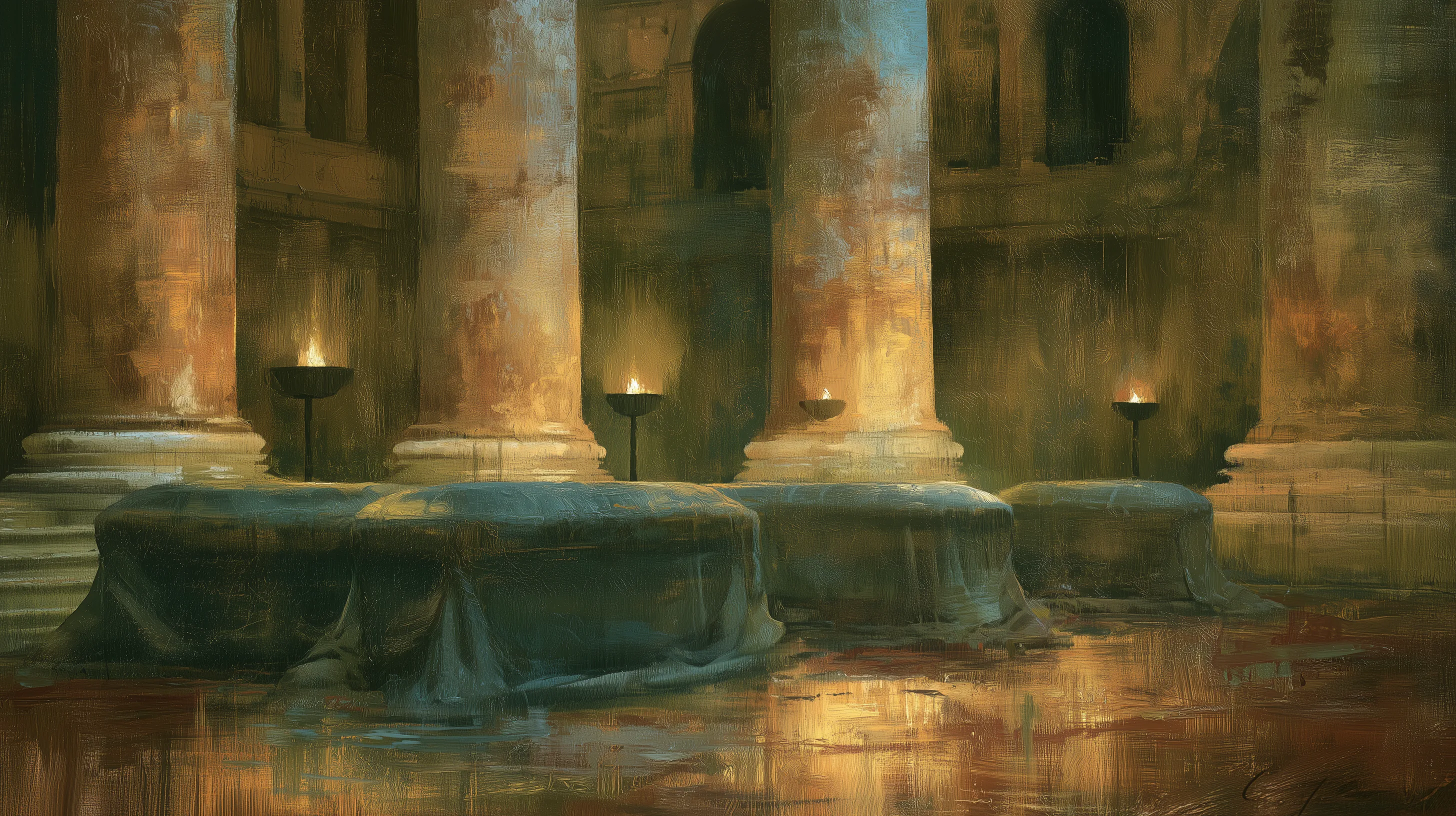
▣ Reconstruction · to source An empty senatorial hall at dusk — four shrouded biers beneath marble columns, four guttering lamps, no people. Absence and chill, not gore.
RECONSTRUCTION reconstruction The four graves — carried in the line of march, where they happened.
II
Command by inspection

The Working Emperor

Not a general who won a battle — an inspector who checked that the order had been followed.

Here you can hear him give an order in something close to his own voice. He governed not from Rome but by walking the empire, camp by camp, city by city. Cassius Dio records him moving through the provinces inspecting garrisons and forts, insisting on the strictest discipline, and leaving behind a “soldiers' law” of campaigning that outlasted him ANCIENT SOURCE likely. He fought no war of expansion as emperor. The defining posture of the reign is a man arriving at a camp, walking the line, checking the work against the manual, and moving on.

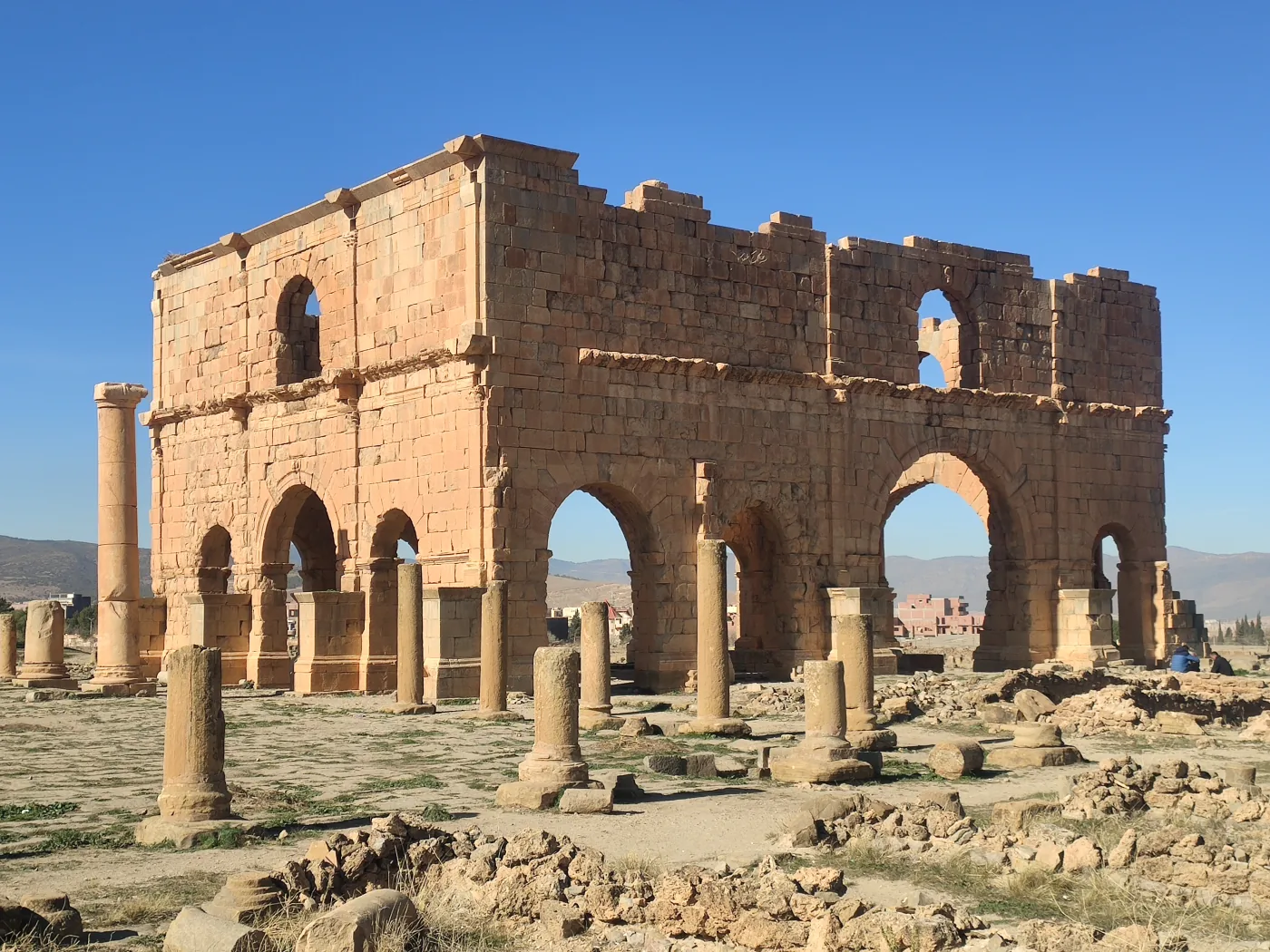
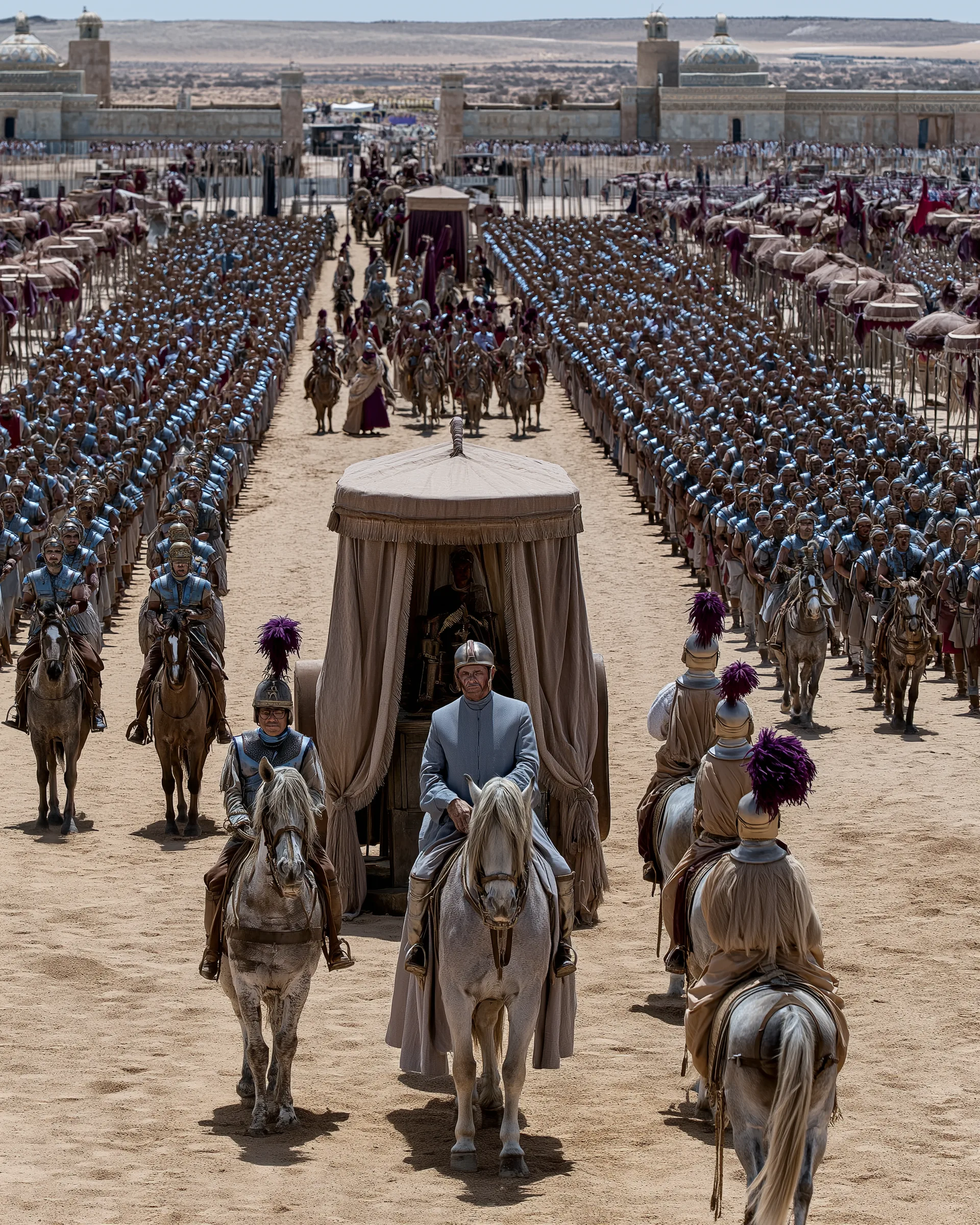
The keystone is the Lambaesis address — ILS 2487, AD 128 INSCRIPTION known — a rare surviving fragmentary imperial adlocutio to the Third Augustan legion and its auxiliaries, delivered on the parade ground after manoeuvres. It praises specific units for specific drills: a heavy-stone wall built in a single day “as if for permanent winter quarters,” cavalry executing the Cantabrian gallop, archery, ditch work, the named Ala I Pannoniorum. And it carries the phrase that is the whole man in four words:

omnia per ordinem egistis — “you did everything according to the book.”

That is brains over brawn at the scale of an army. The same ordering intelligence ran through the machinery of state. In law: the Edictum Perpetuum, the codification of the praetor's edict with the jurist Salvius Julianus — durable infrastructure, outliving him, and not crowd-pleasing SCHOLARLY SYNTHESIS likely. And the bright face of the temperament — the large-scale cancellation of arrears to the treasury, commemorated in connection with CIL VI 967 and on coinage INSCRIPTION known. The famous figure of 900 million sesterces is not leaned on; the act of cancellation is what stands, and it stands well.

The manners belong here too, each labelled. He remembered his old wet-nurse — an inscription names Aelia Germana as nurse of the deified Hadrian INSCRIPTION known. He visited the sick. He bathed publicly with ordinary people; the Historia Augusta gives the veteran rubbing his back against a wall, after which the emperor gave him slaves and maintenance ANCIENT ANECDOTE debated. And the private passion the youth never lost: hunting, and the dogs and horses that went with it — a favourite horse, Borysthenes, honoured with its own epitaph ANCIENT ANECDOTE debated.

And here the dossier's single most important finding about his manners: the asymmetry of the warmth.

The generosity flowed reliably toward those who could not threaten him — crowds, troops, the sick, the nurse. The lethality, which the later chapters carry, flowed toward those who could — peers, rivals, intimates, a province. Who got which is itself the finding. It is not a neutral mix of kind and cruel to be averaged into the word “complex.” It is exactly what a control-organised temperament predicts INTERPRETATION likely — and it is the thread that makes him read as a real and dangerous person rather than a balanced museum label.

▣ Reconstruction · to sourceThe emperor reviewing massed legionaries and auxiliary cavalry on a sun-scorched North African parade ground — disciplined and technical, not triumphant.
RECONSTRUCTION Lambaesis, the inspection.
⚙ Inscription · to sourceThe Lambaesis monument base, with the surviving fragments overlaid — omnia per ordinem egistis.
INSCRIPTION known ILS 2487 — rare, not unique.
III
Britannia, AD 122

Edge of the World

A deliberate edge — chosen rather than pushed, drawn and held rather than conquered.

The Wall is the fourth leg of the march, not the reduction of the man — and it is the best entry to him precisely because it is him. Read the anchor first. RIB 1638 INSCRIPTION known, from the curtain near Milecastle 38 at Hotbank, says: “This work of the Emperor Caesar Trajan Hadrian Augustus (was built by) the Second Legion Augusta under Aulus Platorius Nepos, propraetorian legate.” It names the emperor, the legion, and the governor. It does not name a designer.

It anchors the Wall as Hadrianic policy, executed through the chain of command — and that is all it can be made to say. Hadrian did not personally design the Wall. There is no named designer; military surveyors and engineers under provincial command are presumed UNKNOWN. The Jarrow fragments, RIB 1051, speak of a “divine instruction” and the recovery of the province — commemorative language, not a blueprint. The agency stays with Nepos and the legionary hands.

What is known ANCIENT SOURCE + INSCRIPTION known: he visited Britain in AD 122. The Historia Augusta (11.2) says he “put many things to right” and was the first to build a wall, sea to sea, to separate the barbarians from the Romans. The Wall ran roughly 73 modern miles — 80 Roman. Built under Nepos (governor c. 122–126), with Legio II Augusta named on RIB 1638 and VI Victrix and XX Valeria Victrix central; the centurial stones make the work gangs visible. The first design was a continuous barrier — stone in the east, turf in the west — with a northern ditch, milecastles at every Roman mile, and turrets in pairs. The later changes are part of the story: forts added, the Vallum dug to the south, the curtain narrowed from the Broad Wall gauge.

What is inferred SCHOLARLY SYNTHESIS + ARCHAEOLOGY likely. The line answered the ground — the Tyne–Solway isthmus and the Whin Sill crags suit a linear barrier. The labour was the army of Britain — legions first, an estimated ~15,000, with auxiliaries and the Classis Britannica (RIB 1340). The materials were local; O'Donnell's Edinburgh thesis maps over five hundred quarries. The function mixed controlled movement, taxation and raiding deterrence, integrated with the Stanegate behind it.

What is unknown UNKNOWN. The exact trigger — defence, prestige, economic control, the general frontier habit, or some mix. The designer. Whether he walked the whole line himself. The page displays the silence rather than filling it. Three things this module never says: that Hadrian designed or built the Wall; that the Wall “kept the Scots out” as its primary purpose; that it was his only frontier project — the German palisade and the African limes are the same habit, empire-wide.

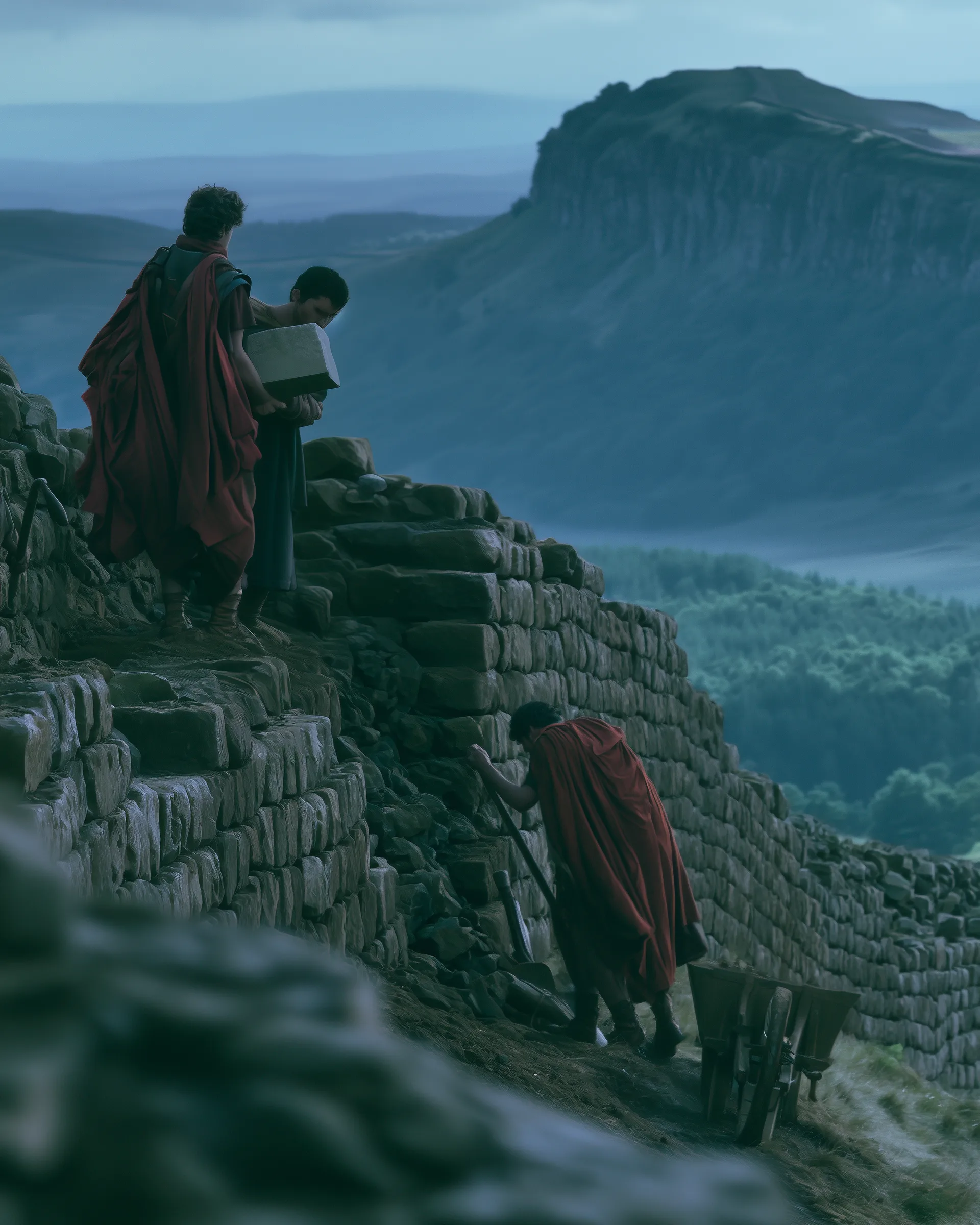
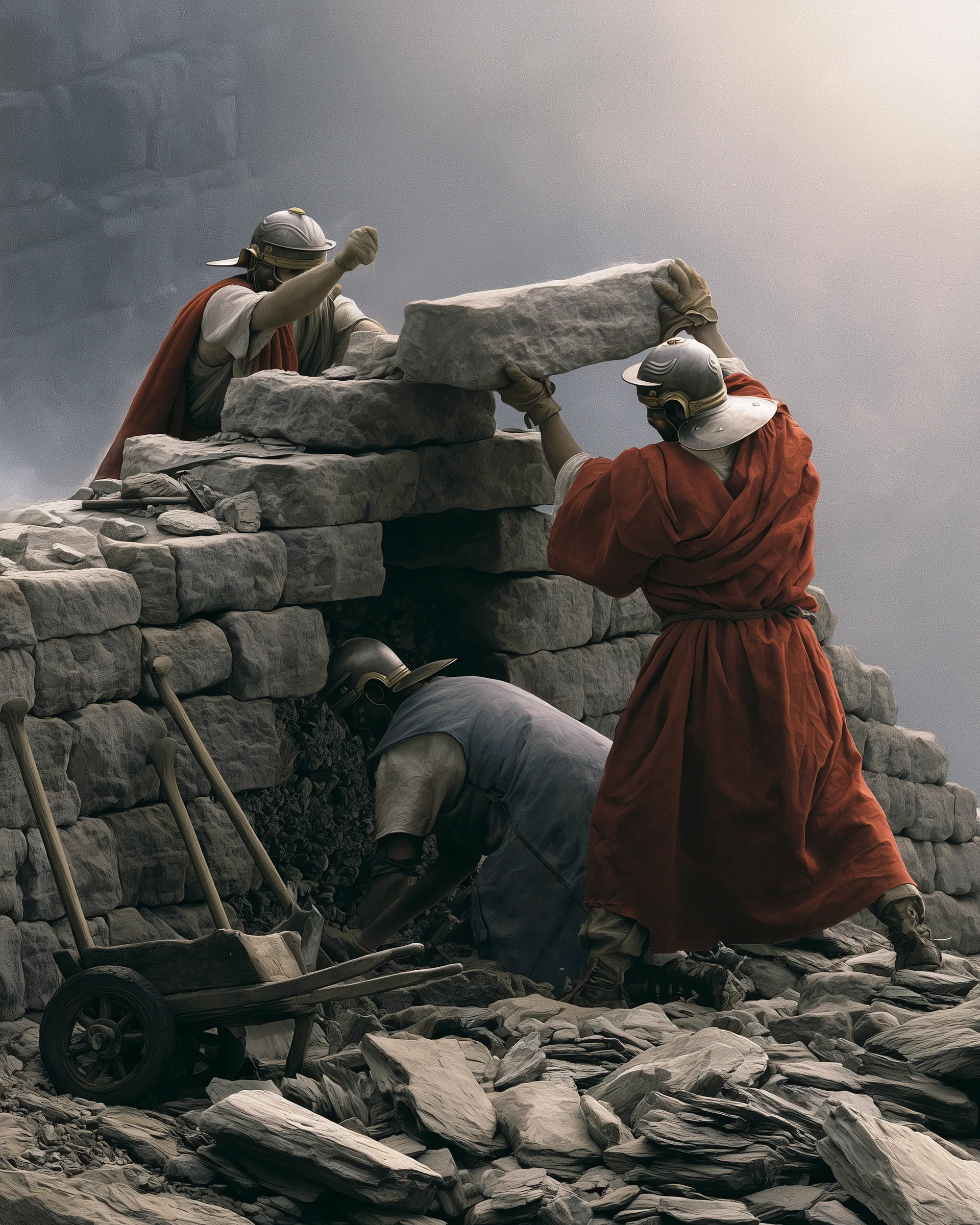
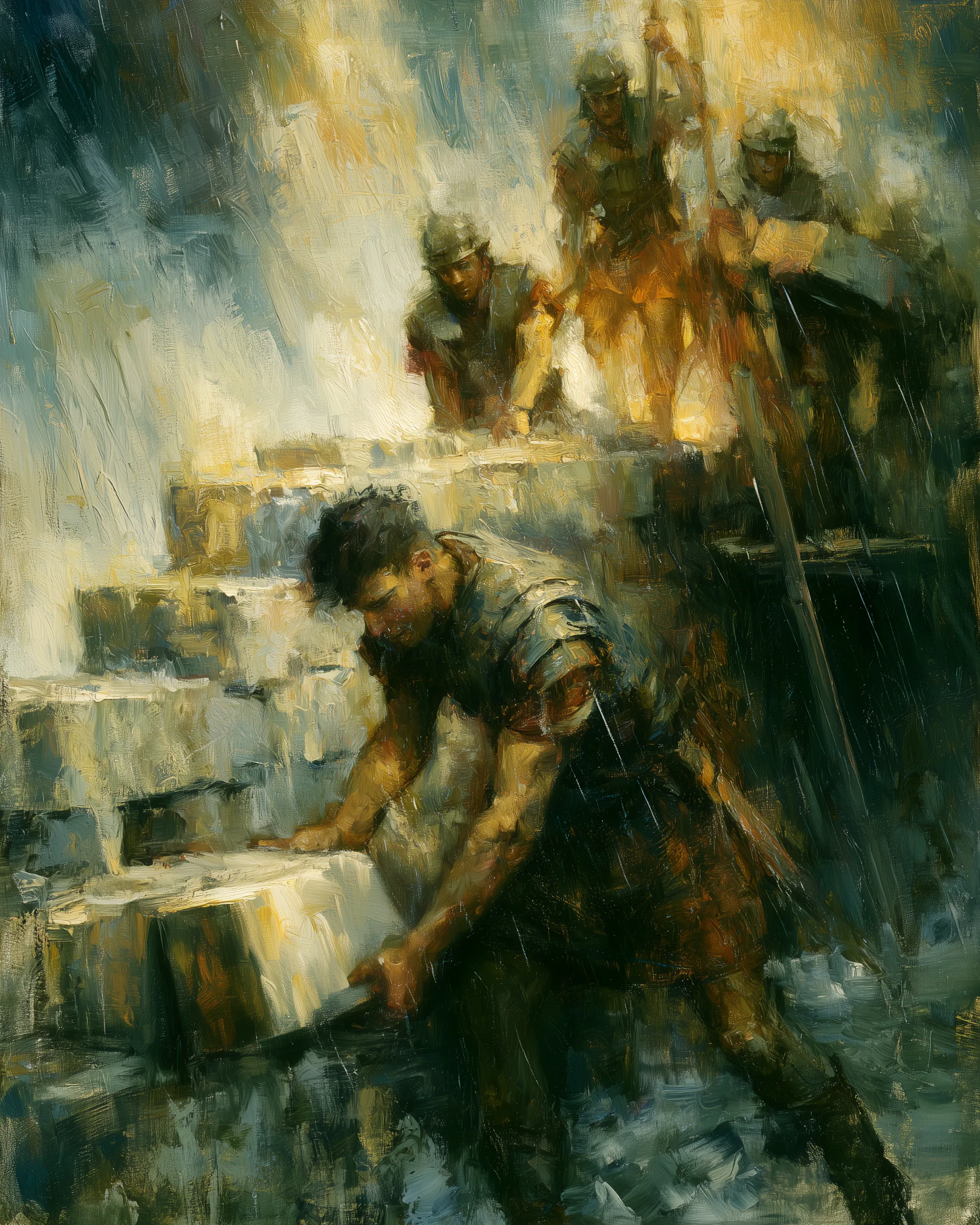
▣ Reconstruction · to sourceLegionaries cutting and hauling pale grey stone across a wild, windswept ridge — working soldiers, no commander posing, no named designer.
RECONSTRUCTION Building the edge.
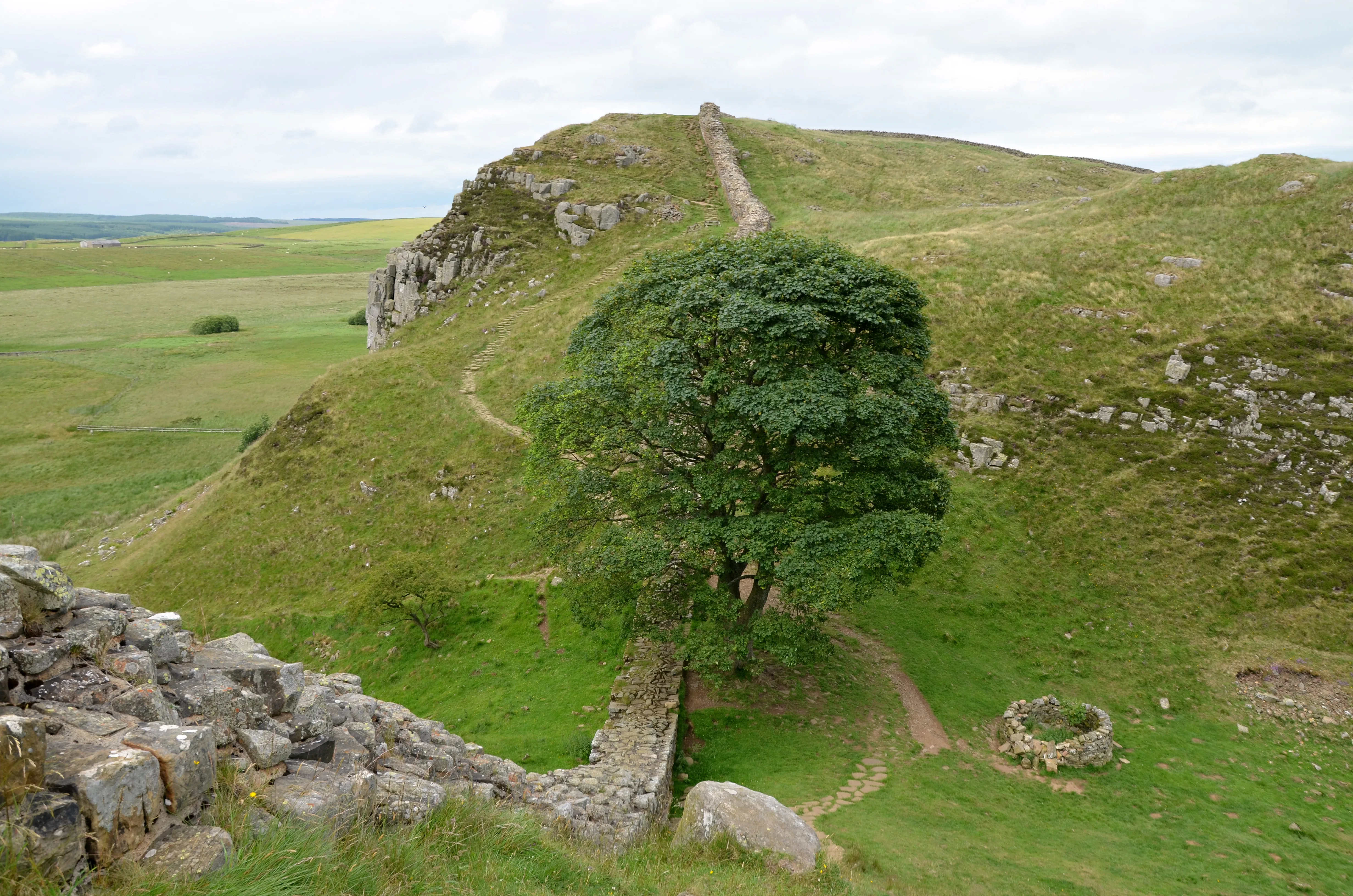
⚙ Inscription · to sourceRIB 1638 in context at the Great North Museum: Hancock, with a transcription overlay — the stone that names three men and no designer.
INSCRIPTION known + a photograph of the standing Wall ARCHAEOLOGY
How the edge was drawnGeneralised reconstruction · not to scale

The frontier was a system, not a wall. North to south: a forward ditch, the berm, the curtain itself (stone in the east, turf in the west; begun broad, finished narrower), the Military Way behind it, and the Vallum earthwork to the south. No source names its designer — surveyors and engineers under Nepos set it on the ground.

← NORTH · the barbarians the province · SOUTH → Ditch Military Way Berm Vallum Curtain Wall stone east · turf west · broad → narrow
the curtain wall cut earthwork (ditch · Vallum) the Military Way
By whose handsInscription + reconstruction

RIB 1638 names the chain of command — emperor, legion, governor — but not a designer. The agency runs from imperial policy down to the work gangs whose centurial stones still mark the lengths they built.

HADRIAN
Emperor · the policy and the order
Aulus Platorius Nepos
Governor of Britain, c. 122–126 · named on RIB 1638
Legio II Augusta
named on RIB 1638
VI Victrix
building legion
XX Valeria Victrix
building legion
Classis Britannica + auxiliaries
fleet and support · RIB 1340
Centurions
each gang's commander — the centurial stones still mark their lengths
The work gangs
the legionary hands — and the unnamed surveyor the record never gives us
IV
Culture, organised

Beard & the Greeks

The aesthete and the administrator turn out to be one person.

Two inscriptions on one arch, facing opposite ways, settle what kind of philhellene he was. On the side toward the old town, the Arch of Hadrian declares this the city of Theseus; on the side toward his own new quarter, it declares it the city of Hadrian and not of Theseus INSCRIPTION known. A man built his own ambiguity into stone.

Greek culture was not a hobby decorating a Roman emperor. It was a chosen identity, held in tension with his role, and beneath it ran the same ordering mind, now pointed at culture — a city-maker and an organiser of identity, not a soft enthusiast. The face of it is the beard. He wore one routinely — and roughly 150 surviving portraits hold to a single curled-hair, bearded type, the Fittschen typology OBJECT known. He is taken to be the first emperor to wear a full beard as standard imperial portraiture SCHOLARLY SYNTHESIS likely; the Historia Augusta gives a double motive, philhellenism plus covering natural blemishes ANCIENT ANECDOTE debated. A managed, repeated image across an empire — itself a tell about the curated legend.

In Athens, the ordering mind builds. He completed the centuries-stalled Temple of Olympian Zeus (the Olympieion, dedicated 131/132), built the Library of Hadrian, raised the Arch, revived the aqueduct, and founded the Panhellenion — a league, an attempt to organise Greek identity into a structure with Athens as its capital. He took part in the Eleusinian Mysteries and the Dionysia. His career base records the archonship of 112/113 INSCRIPTION known.

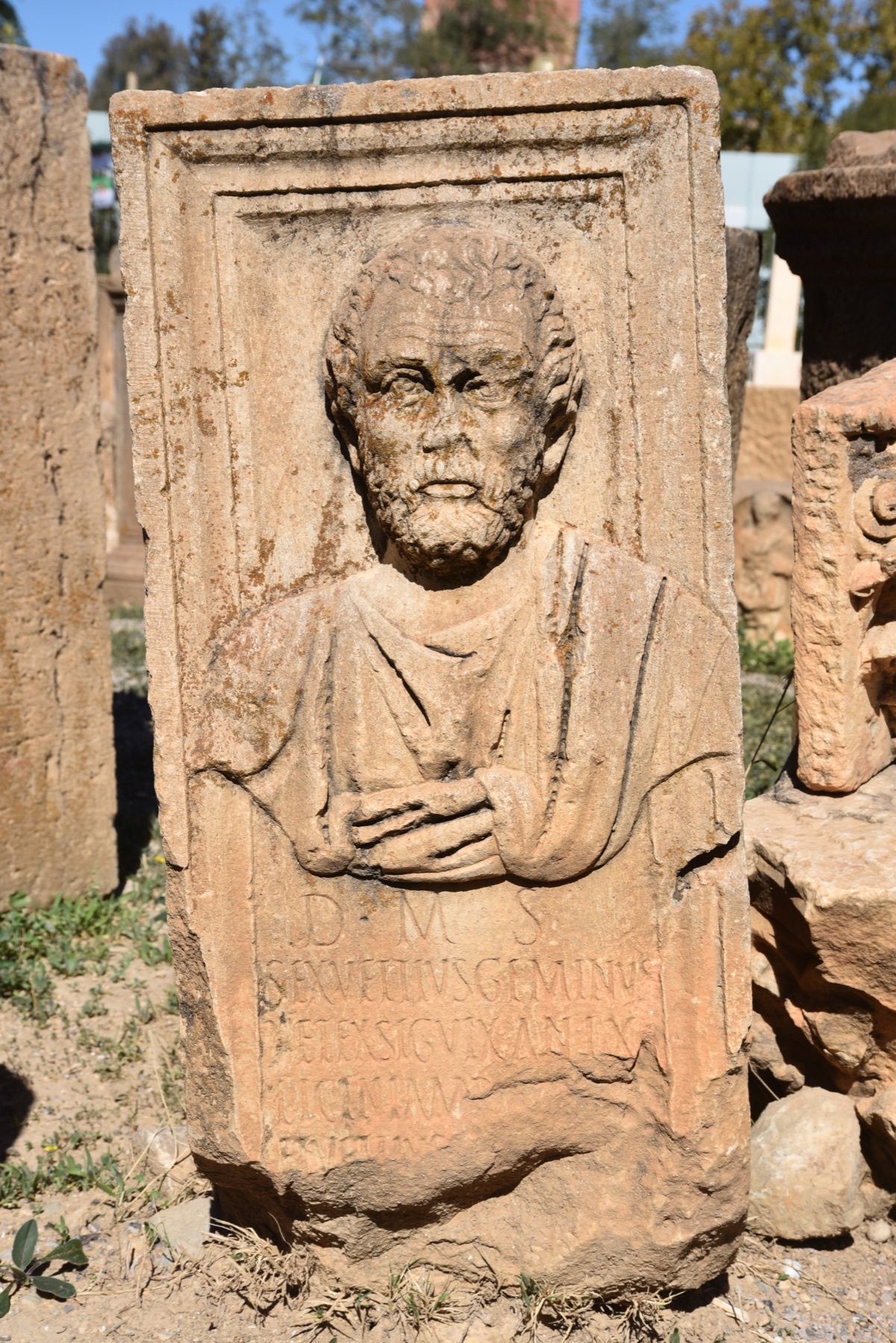
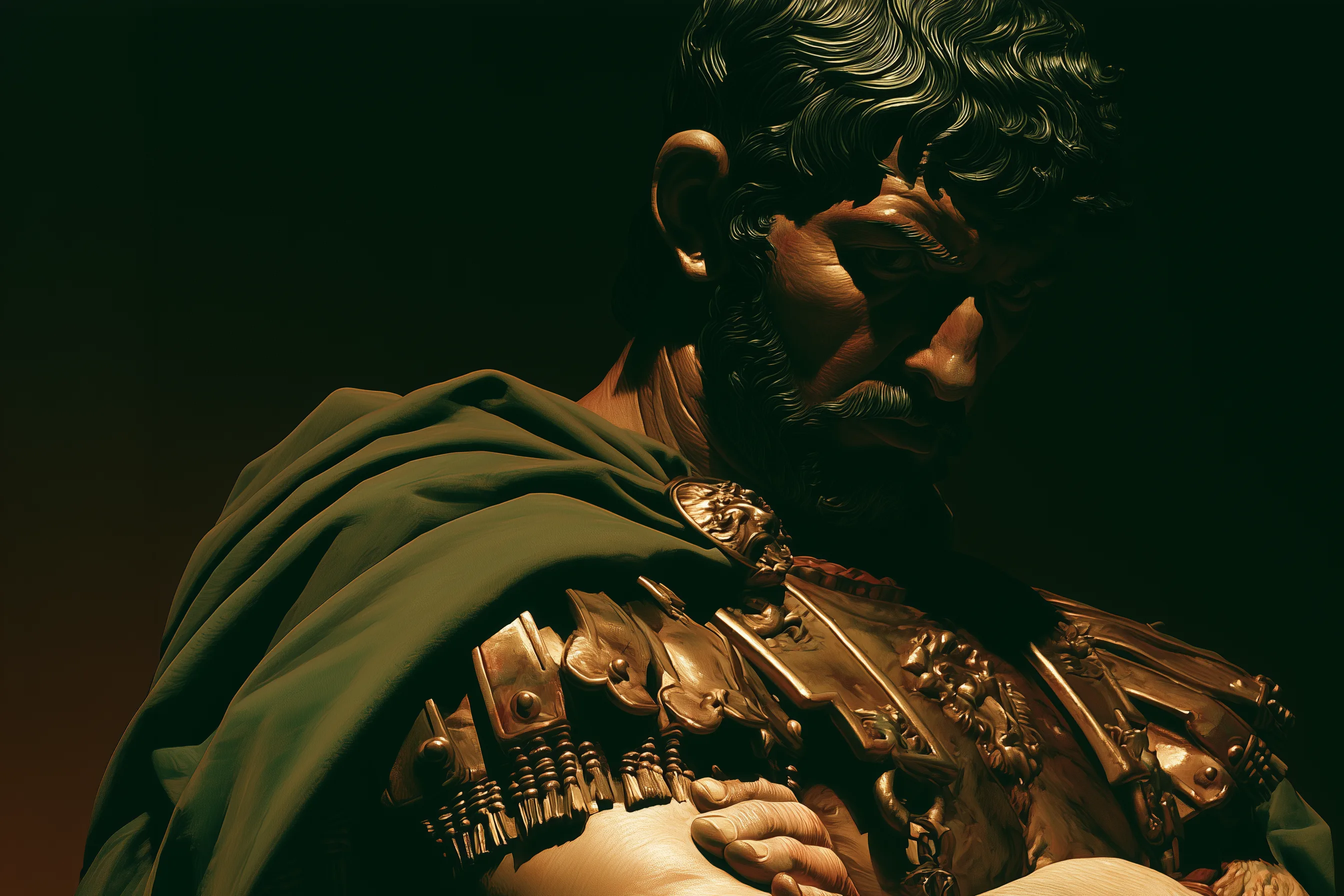
Portrait of Hadrian — the curled hair and full Greek-style beard
RECONSTRUCTION reconstruction The beard and the curled-hair type — artist's impression. For live build, pair with a real portrait head (Townley/BM, Vatican, Capitoline) under its own rights check.
V
The ordering mind turned domestic

Empire as a House

He stopped travelling and built the journey instead.

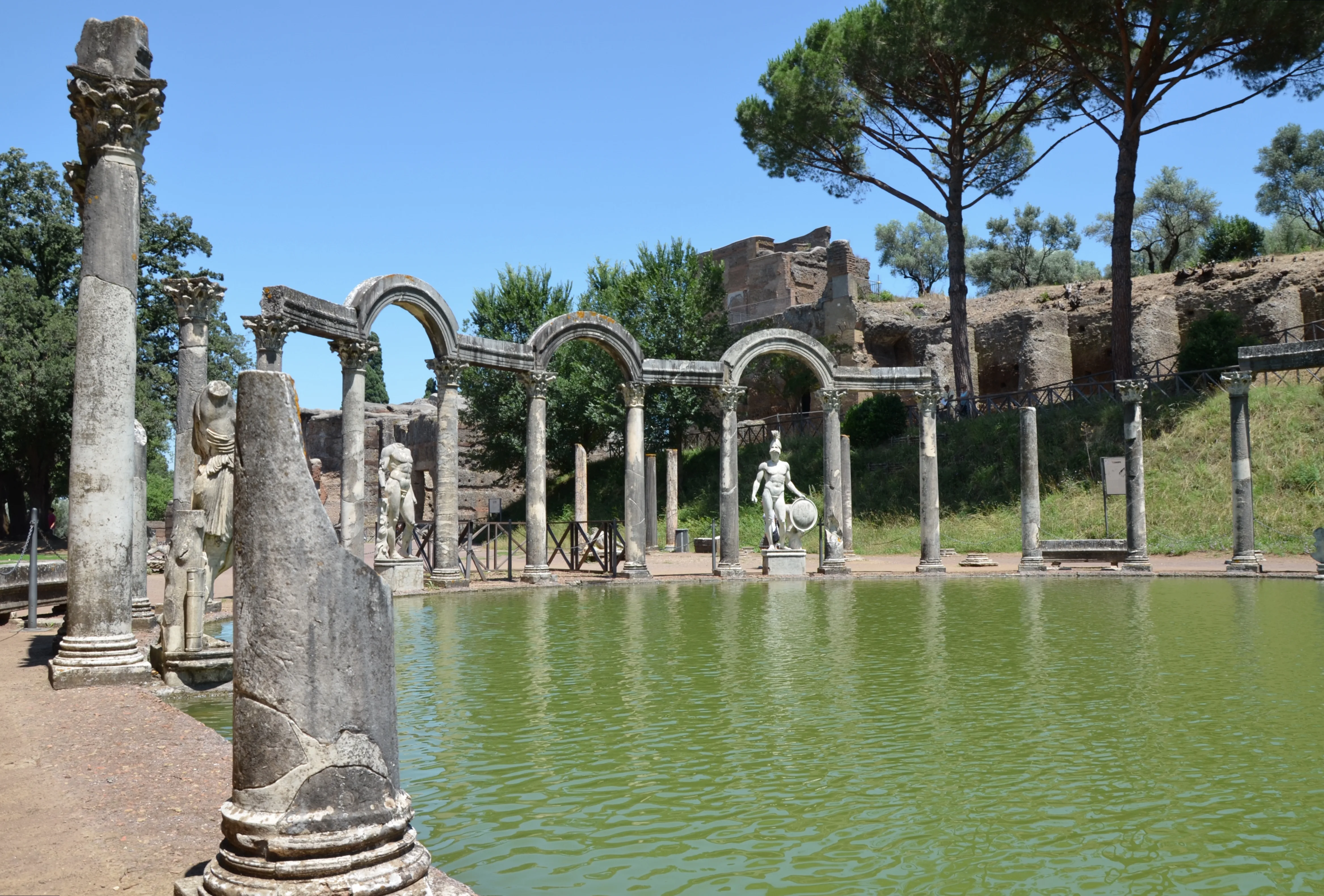
At Tivoli he stopped travelling and built the journey instead. The Canopus pool quotes Egypt; the Poikile quotes the Athenian stoa; the Maritime Theatre is an experiment in a moat; libraries, aqueducts and service tunnels run the place out of sight. Villa Adriana is over a square kilometre — and the sources and scholarship read it as an “ideal city” and a memory palace, every province he had inspected brought home and arranged ARCHAEOLOGY · UNESCO known INTERPRETATION likely. This is the ordering mind turned domestic: the world pulled into one estate.

The caution from the Wall carries straight through. He was a major patron with a probable genuine interest in architecture — never the proven hand on the drawing. “Personally designed” stays out. The same restraint covers the Pantheon, rebuilt under him and keeping Agrippa's original inscription on its face: patron, possibly with architectural interest, never proven designer.

▣ Archaeology · to source · Met Open-Access available The Canopus reflecting pool at Villa Adriana — a real site photograph; with the Met's public-domain Piranesi plates (Canopus, Piazza d'Oro) as the evidence-object layer.
ARCHAEOLOGY known The memory palace as a system, not a ruin to wander.
VI
The Nile, 130

Marble & Mourning

Even a private feeling made into a public, permanent, controlled installation.

On the Nile in 130 the singing colossi of Memnon were inscribed by the poet Balbilla, recording the imperial party's visit at dawn INSCRIPTION known. Sabina was aboard; so was the man the journey is remembered for. The barge moved upriver under lamps and reed sails, temples in silhouette — the calm before the loss.

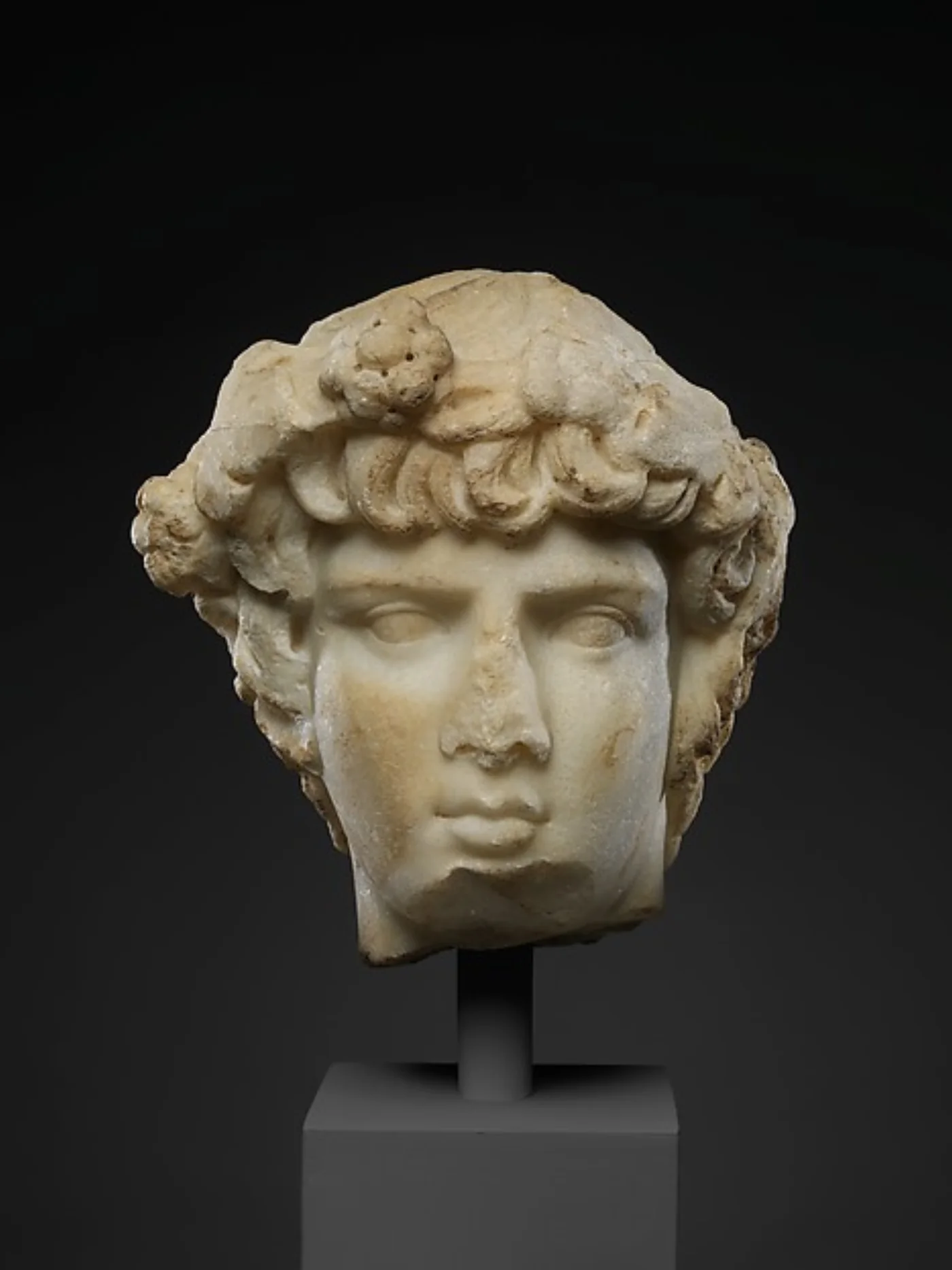
Then the loss. Antinous, the Bithynian youth (c. 110–130; met around 124), drowned in the Nile in October 130. The death is held exactly where the evidence leaves it: unsolved. Accident, suicide, and self-sacrifice for Hadrian's life are all present in Dio only as rumour ANCIENT ANECDOTE · unknown. The page does not solve it — and the character point stands regardless of which it was, because the response to the death is the finding. Hadrian founded or renamed Antinoopolis on 30 October 130, a Greek-style grid city with the cult of Osiris-Antinous, and drove a cult that spread, in Dio's phrase, almost across the whole world. More images of Antinous survive than of almost any ancient figure OBJECT known: the Mondragone head at the Louvre, the Farnese statue at Naples, the Capitoline Antinous, the Met's marble head, the Egyptianising obelisk in Rome.

Even in love, even in mourning, the instinct was to take a private feeling and make it a public, permanent, controlled installation.

Two lines are fixed here. No clean modern sexuality label is assigned as fact — the relationship is real and consequential, the grief is real, the cult is documented, but the category is not in the sources, and the tenderness is never used to humanise away the autocrat. And the death is never solved. Sabina herself — the childless, strained, political marriage — is named plainly, without speculation; her private feelings, and his, stay in the UNKNOWN register.

⚙ Object + Archaeology · to source · Met Open-Access head available The Antinous object constellation — sculptures and the obelisk treated as objects, not gossip — set against the Antinoopolis street-grid plan overlaid on the modern site.
OBJECT known Grief, translated into a city plan.
VII
What would not be ordered, removed

Dark Arrangement

Benefaction and violence flowed from one temperament: generous where it was safe, lethal where control was threatened.

The same ordering mind that drew the edge of Britain also removed whatever would not be ordered. That is the darkest and best-attested fact of the reign, and it belongs in the line of march, not in an appendix.

The centre is Bar Kokhba. The refoundation of Jerusalem as the Roman colony Aelia Capitolina, with a Capitoline temple, is cited by Dio as the principal cause of Jewish anger; the Historia Augusta also notes a ban on circumcision. The causation is debated and multifactor — both factors likely, and the timing itself debated, with recent cardo excavation and numismatic work suggesting preparatory work may have been under way in the 120s SCHOLARLY SYNTHESIS debated. The revolt of 132–136 was led by Shimon Bar Kokhba; his coins, letters and hiding complexes survive ARCHAEOLOGY known. The suppression ran through Tineius Rufus and then Julius Severus, an experienced and cold professional, and took years of attrition and scorched-earth war to break.

Dio reports massive devastation — fifty forts, 985 villages, 580,000 dead. These figures are carried as ancient testimony, contested by archaeology (Raviv, Ben David and others), never as census; they appear wrapped in that contestation frame, never bare. There is no body-count infographic. The severity was a feature of the method, not an accident of war.

The other eliminations cluster at the moments of maximum threat: the four consular deaths at accession, and, at the succession, the forced suicides of the aged brother-in-law Servianus (around 90) and his young grandson, to clear the path. The dark column rests on these load-bearing facts — not on gossip. The spying-on-the-household letter, the Apollodorus “gourds” execution, the would-have-divorced-Sabina line are ANCIENT ANECDOTE colour, carried as illustration of how he was remembered, never as load-bearing fact; and Attianus was pensioned, not killed.

And here the page names its own deepest blind spot.

The evidence for this chapter — and for the whole reign — speaks almost entirely in the voices of the emperor, his enemies, and the inscriptions. The conquered and the common are near-silent. Jewish and Christian memory of the revolt is a lead not deeply mined; the frontier papyri and ostraca, the commoner's daily experience, remain UNKNOWN. A dossier that includes Bar Kokhba and stakes its reputation on honesty has to say so out loud — or it silently reproduces the elite-and-hostile-source bias it claims to expose.

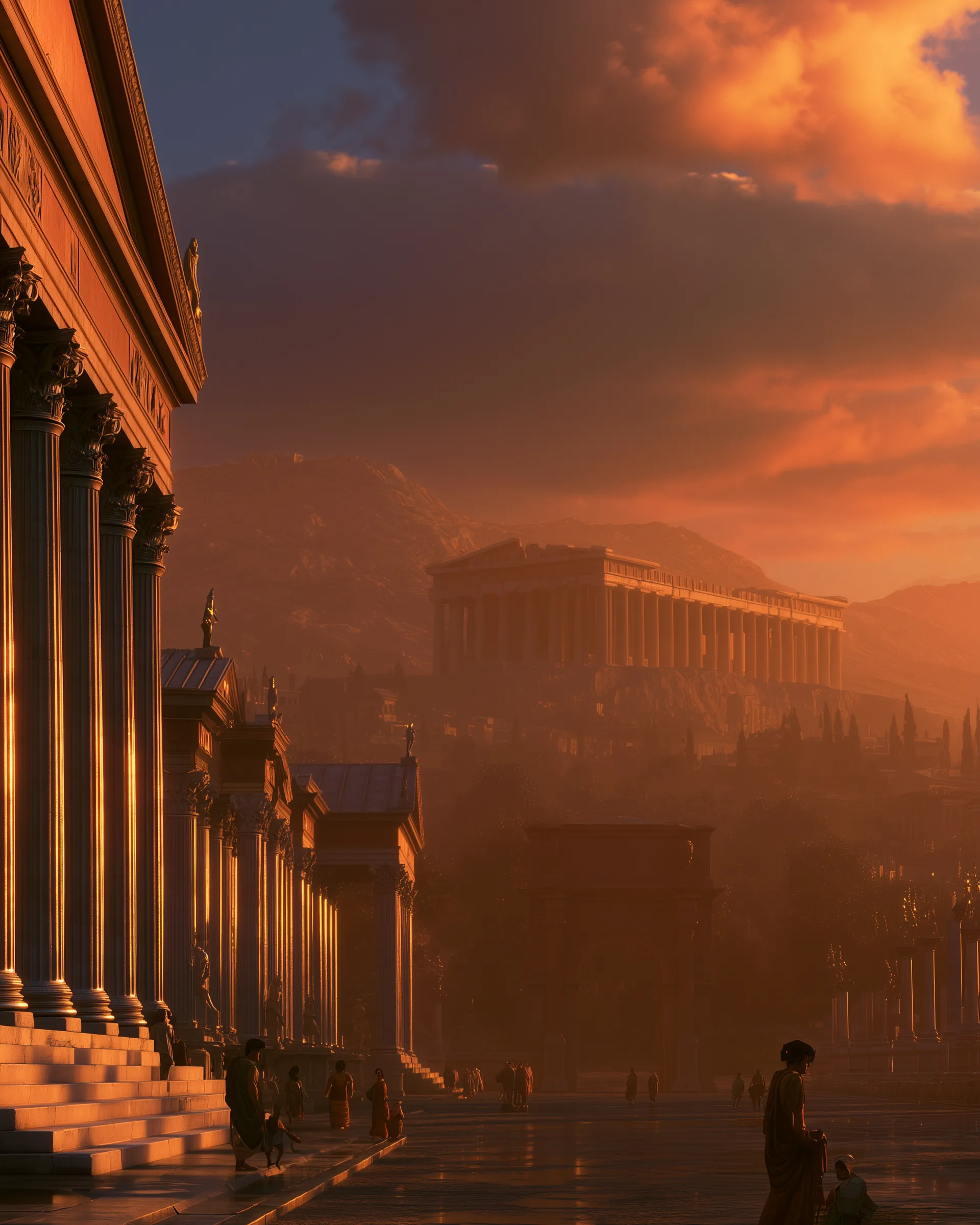
▣ Reconstruction · to sourceA sober split counter-panel: Athens honoured in marble on one side; Judaea under harsh Roman control on the other. Both restrained. No gore.
RECONSTRUCTION The city-maker and the controller, one reign.
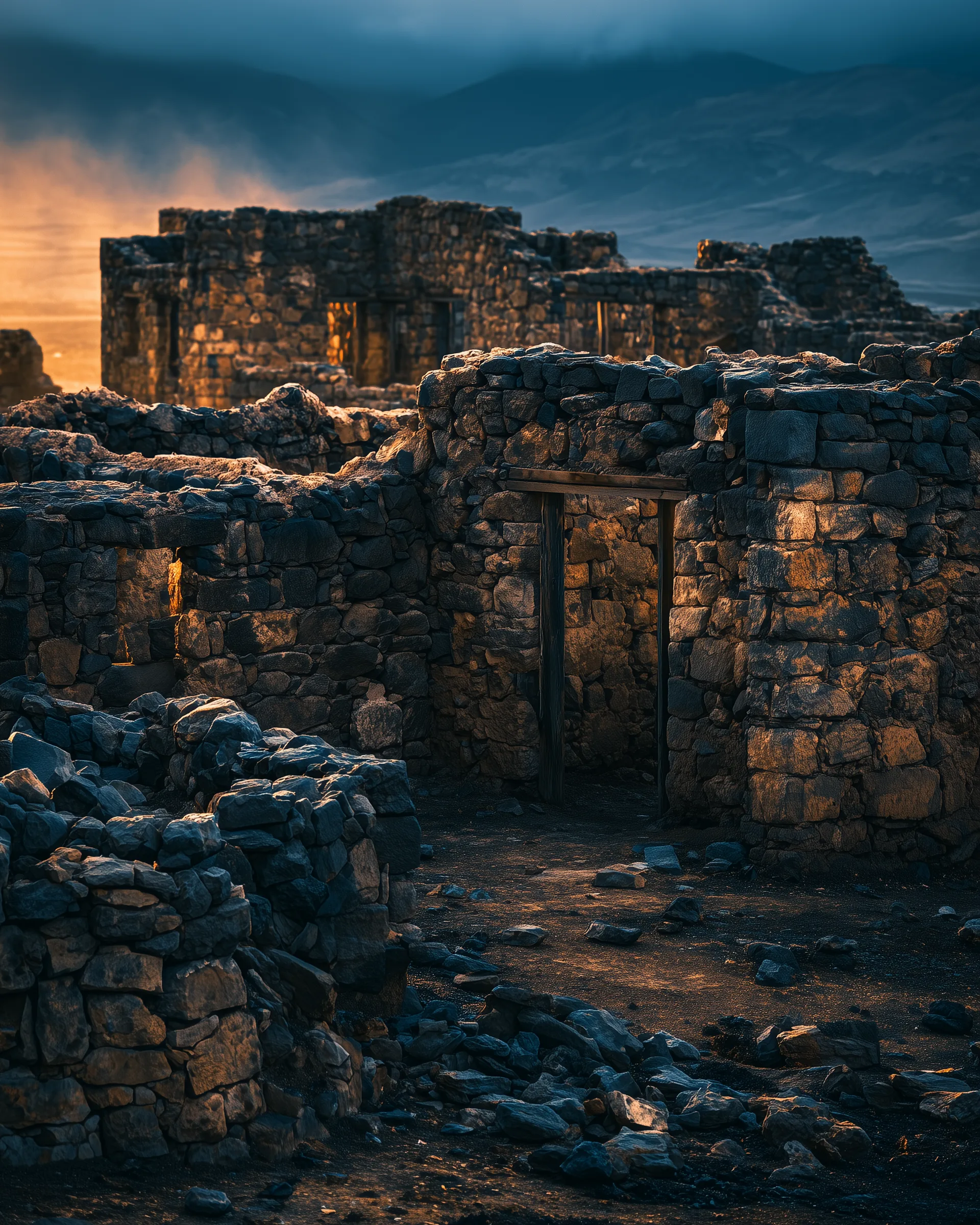
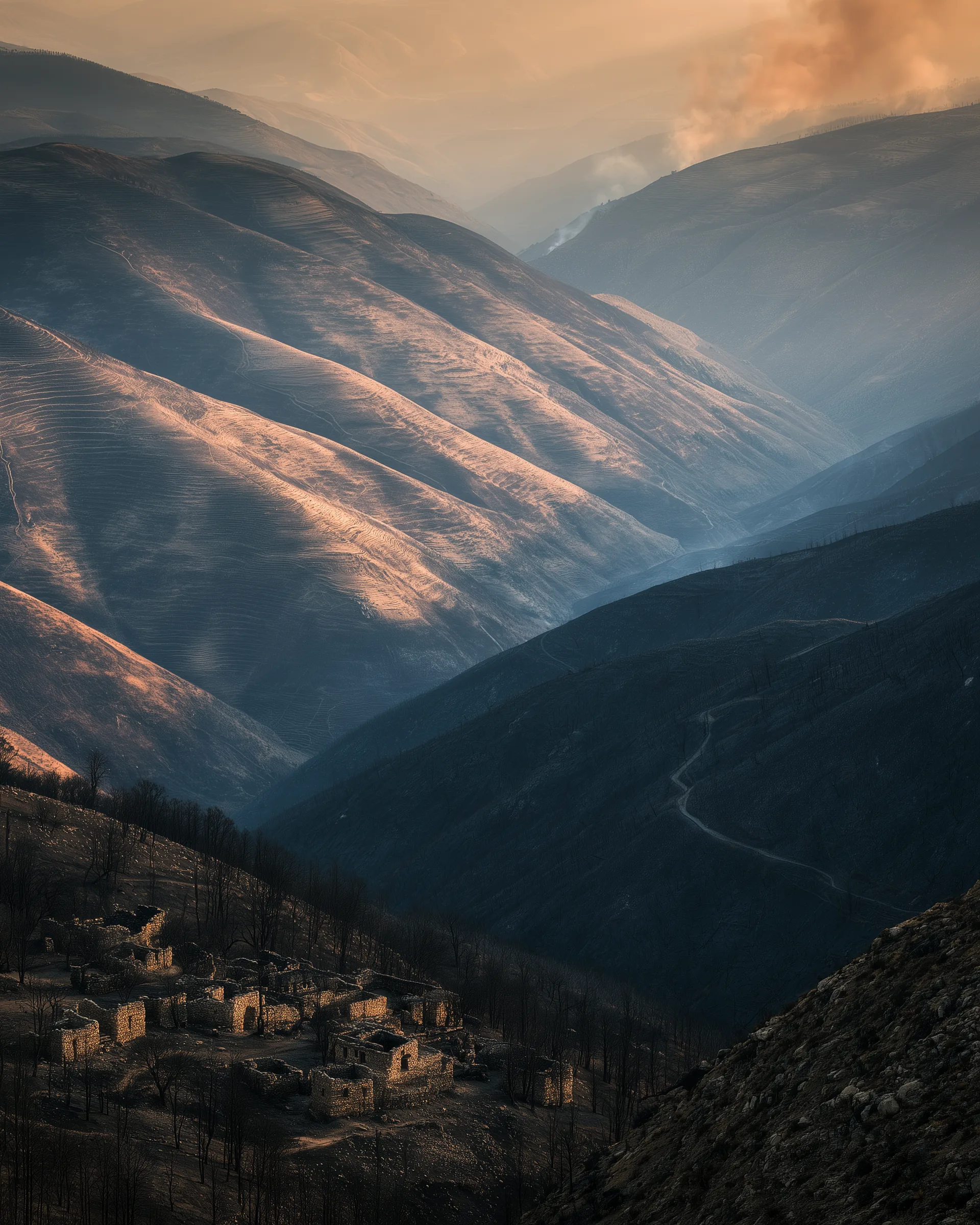
▣ Reconstruction · to sourceScorched, depopulated Judaean hill country — abandoned dry-stone villages, smoke on a distant ridge. Aftermath, not battle.
ARCHAEOLOGY + ANCIENT SOURCE The cost the page refuses to call “cost.”
VIII
Baiae, AD 138

Animula Vagula

The man who could order an empire could not order his own failing body — and at the end he knew it.

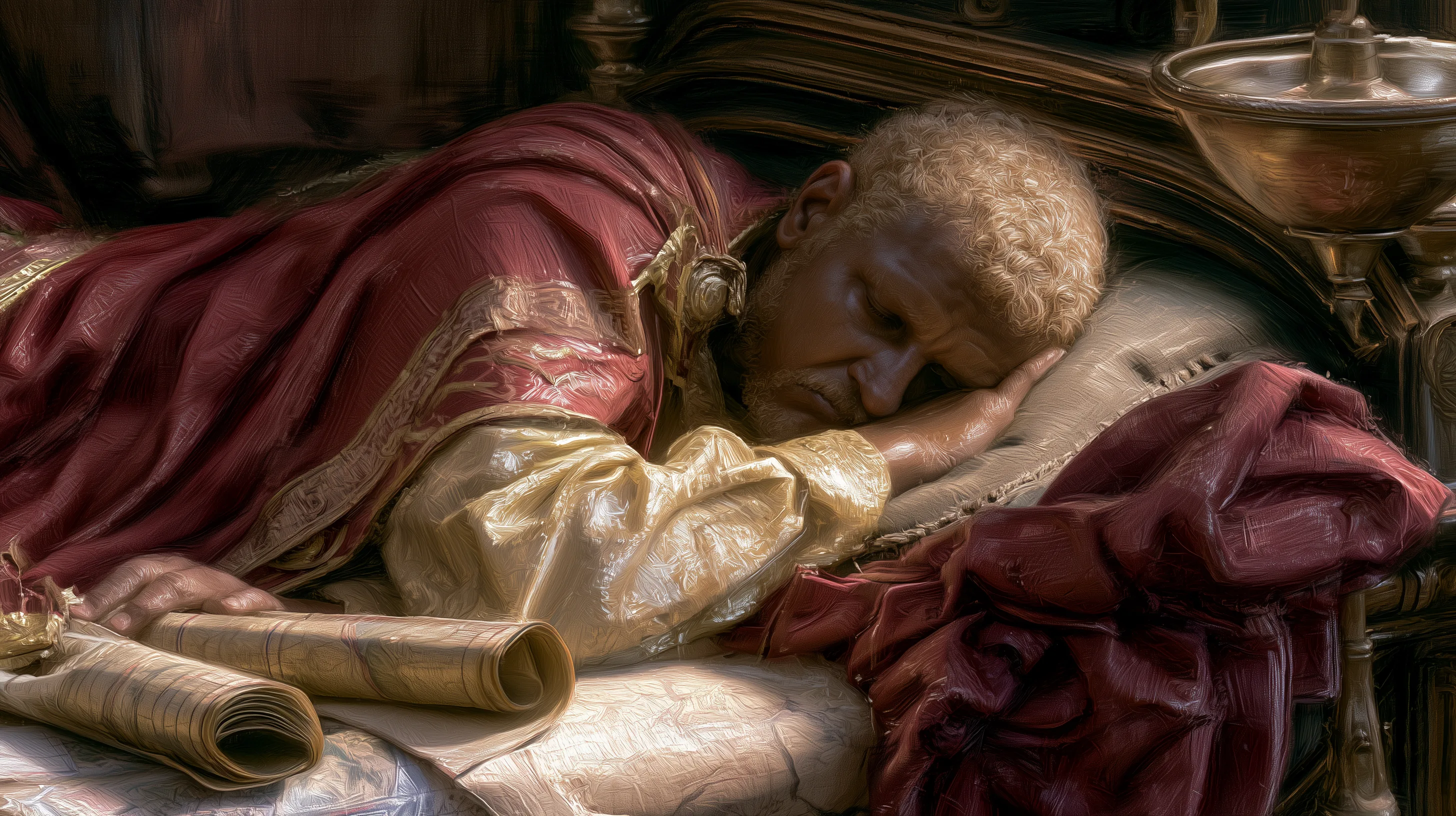
The man who could order an empire could not order his own failing body, and at the end he knew it. The late years carry a heavier weather: chronic illness, worsening nosebleeds, what the sources describe as severe depression, and the reported begging of the slave Mastor for a sword or poison, refused ANCIENT SOURCE debated. Consumption and dropsy are among the modern retrospective guesses; none is secure. He disliked the Palatine and retired to Baiae and its thermal baths, dying there on 10 July AD 138, aged 62. A fallen toga, a slipped ring — the tradition keeps the omens.

Against the physical collapse, the administrative competence still functioned. He secured the succession by compelling the suicides of Servianus and his young grandson, adopted Aelius — who died in 138 — and then Antoninus Pius, on the condition that Antoninus adopt Marcus Aurelius and Lucius Verus. The man who could not order his own body still arranged the empire that came after him.

The deathbed poem the tradition gives him — animula vagula blandula, “little soul, wandering, gentle” — turns even dying into a delicate, ironic literary performance. It is labelled ANCIENT ANECDOTE debated, absent from Dio, never presented as his documented last words.

▣ Reconstruction · to source Death at Baiae — an aged emperor in a dim coastal villa room, rolled maps and adoption documents beside him, a red cloak folded, a bronze lamp, distant sea light. Control finally failing. No theatrical crowd.
RECONSTRUCTION reconstruction Paired with the Mausoleum — later Castel Sant'Angelo — as newly completed. Antoninus' dedication recorded, CIL VI 984 INSCRIPTION known. The ashes' later fate uncertain — not “lost in the 410 sack” as fact.
IX
The page's conscience

The Evidence Problem

Our Hadrian is a portrait painted by his enemies, laid over a self-portrait he commissioned.

Our Hadrian is a portrait painted by his enemies, laid over a self-portrait he commissioned. The enemies are an epitomised, senatorially biased Dio, surviving only in fragments — essential nonetheless — and a late, colourful, often-invented Historia Augusta, used for colour only and always labelled. The self-portrait is a lost autobiography, roughly 150 portraits locked to one type, a curated coinage of adventus and restitutor. The warmest material and the darkest both reach us through self-curation and hostile transmission.

So the page tells you which stratum each thing stands on. The bright column rests on its firmest ground — RIB 1638, the Edictum Perpetuum, Lambaesis, Villa Adriana, CIL VI 967. The dark column rests on its own load-bearing facts — the four consular deaths, Servianus and his young grandson, Bar Kokhba. Neither column borrows weight from gossip. The policy spine survives the fracture better than the private-life anecdotes do, and the page says exactly that.

The evidence-confidence matrix — the conscience as a graphic. Each claim shown on the stratum it actually stands on.
ClaimEvidenceCertainty
The Wall is Hadrianic state policy, by the chain of commandInscription (RIB 1638)known
The designer of the Wallunknown
Lambaesis: he inspected and praised by the manualInscription (ILS 2487)known
Birthplace (Rome vs Italica)Ancient source, disputeddebated
The four consular deaths at accessionAncient sourceknown
Whether Hadrian personally ordered themAncient source, contesteddebated
The cause of Antinous' deathAncient anecdote (rumour)unknown
Bar Kokhba revolt and its suppressionArchaeology + ancient sourceknown
Dio's casualty figures (580,000 dead, etc.)Ancient source, contested by archaeologydebated
The Edictum Perpetuum as durable legal reformScholarly synthesislikely
Villa Adriana as a “memory palace”Interpretationlikely
A modern sexuality labelNot in the sourcesunknown
The deathbed poem as his last wordsAncient anecdotedebated
Our thesis: control-organised intelligenceInterpretationdebated

The UNKNOWN register — elegant silence, left standing in plain sight

The contradictions are real, and the sources fixate on them. The Historia Augusta calls him “austere and genial, dignified and playful, cruel and merciful, and in all things changeable,” and even hostile Dio keeps both the praise and the menace. When the two most divergent sources independently land on “changeable,” the contradiction is a datum, not noise. But what is irreducible is the moral verdict, not the character. The ledger does not net out. The contradictions do not cancel into mystery; they radiate from one centre — control, order, legibility — which all three independent assessments named on their own.

He loved the world enough to map it. He feared disorder enough to kill for the map. Not a monster — something more ordinary and more dangerous: an autocrat who needed to be in control, and who removed what would not be controlled.

The reign in time

Sixty-Two Years, in One Line

Forty-one years to the throne; then half the reign on the road. The travelling years and the war run above the line; the fixed points hang below it.

the travelling years 132–136 · the war AD 76 — birth · Rome or Italica (disputed) c.100 — marries Sabina 112/3 — archon at Athens 117 — accession, in Syria 122 — Britain · the Wall begun 128 — the Lambaesis address 130 — the Nile · Antinoopolis founded 131/2 — Olympieion · the Panhellenion 138 — death at Baiae
turning points travelling years (117–18 · 121–25 · 128–32/3) the Bar Kokhba war
The standing layers

The Evidence Dossier

The firmest stratum — the inscriptions every public claim routes into.

RIB 1638
The Wall as Hadrianic policy through the chain of command. Names Hadrian, Legio II Augusta, the governor Nepos — names no designer. Great North Museum: Hancock.
INSCRIPTION known
ILS 2487 · Lambaesis, AD 128
The rare surviving fragmentary adlocutio. Omnia per ordinem egistis. Unit-specific praise. Framed rare, not unique.
INSCRIPTION known
IG II² 5185
The Arch of Hadrian's dual text — the city of Theseus / the city of Hadrian. The ambiguity built into stone.
INSCRIPTION known
IG II² 3286
The Athens career base — the archonship of 112/113 and the offices Trajan advanced him through.
INSCRIPTION known
CIL VI 967
The debt-relief commemoration. The act stands; the 900-million-sesterces figure is not leaned on.
INSCRIPTION known
CIL VI 984
Antoninus' dedication on the Mausoleum — the tomb that became Castel Sant'Angelo.
INSCRIPTION known
RIB cluster · 1340, 1051, 3364
The fleet (Classis Britannica); Jarrow's “divine instruction” (commemorative, not a blueprint); “killed in war.” The work gangs in the centurial stones.
INSCRIPTION known
Aelia Germana nurse inscription
Names Germana as nurse of the deified Hadrian. The fuller “Germanic slave / freed” colour is held back until the exact edition is pinned.
LIVE LEAD

Source-reliability, in one breath. Cassius Dio (Book 69) — essential for accession suspicion, travels, discipline and cruelty; senatorially biased, surviving in epitome. The Historia Augusta — late, colourful, often invented; colour only, always labelled, never a softening frame for the violence. Grok, CodeX and the source packet behind this dossier are leads and synthesis, never authority — public claims route to RIB, Dio, the Historia Augusta (with caveat), IG/AIO, English Heritage, UNESCO, museum objects and named scholars (Birley, Boatwright, Opper, Eck, Vout, O'Donnell, Collins, Renberg).

If he were here today

The Interactive Maps

His life wants spatial data more than paragraph density — so the reign itself becomes a map. The cross-section, command chain and timeline are built into the chapters above; these two open full-screen.

Showpiece The Inspection Itinerary Half a reign of travel — from the Tyne to the Nile. Solid where an inscription, coin or papyrus dates the stop; dashed where the route is inferred. The empire, becoming legible at the pace he made it legible. open the map → The frontier itself The Wall Corridor Segedunum → Maia — the wall line, the forts, the milecastles and turrets, off the real survey geojson. A left-to-right journey along the edge he drew across Britain. walk the Wall →

We do not build charts for the unknowable. No timeline of Antinous death-causes, no sexuality chart, no “mood over time,” no quantified body-count of Bar Kokhba, no daily-schedule clock from anecdote, no “% of buildings he personally designed.” Where the evidence is thin, the graphic displays the silence.